


Transitioning to organic farming is a highly rewarding decision, but the initial phase can be financially challenging. To encourage sustainable agriculture and reduce the reliance on chemical fertilizers, both the Central Government of India and the Punjab State Government offer various subsidies and financial assistance programs. For farmers in Punjab, understanding these schemes is the first step toward a profitable organic journey.
1. Paramparagat Krishi Vikas Yojana (PKVY)
The PKVY is one of the most prominent national schemes promoting organic farming. Under this scheme, farmers are encouraged to form clusters (groups of 50 or more farmers having 50 acres of land collectively). The government provides financial assistance of up to ₹50,000 per hectare for three years. This fund can be utilized for organic seed procurement, harvesting, and transporting produce to local markets.
2. Subsidies for Vermicompost Units
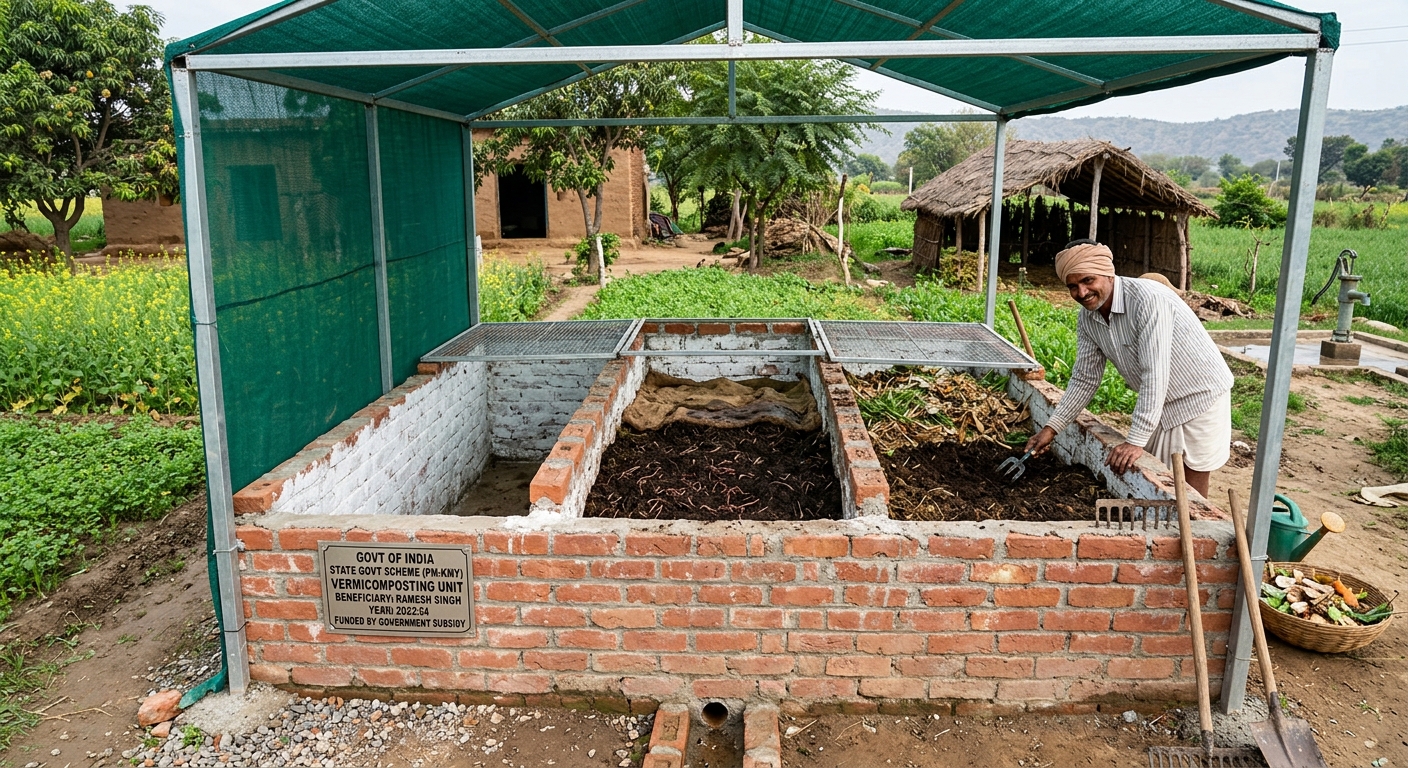
Setting up a vermicompost unit is the backbone of any organic farm. The Punjab Agriculture Department, under various state and national missions like the Rashtriya Krishi Vikas Yojana (RKVY), provides significant subsidies to farmers setting up permanent vermicompost pits. Depending on the size of the unit and the specific district allocations, farmers can receive up to 50% subsidy on the construction costs, making it highly affordable to produce your own “Kechwa Khaad” (earthworm compost).
3. The Organic Certification Process (PGS-India)
To sell your produce at a premium price, it needs to be certified as organic. The Participatory Guarantee System (PGS-India) is a farmer-friendly certification process where local groups of farmers inspect each other’s land. The government heavily subsidizes this certification process under the PKVY scheme, meaning farmers have to pay very little out-of-pocket to receive their official organic tag.
4. Subsidies on Agricultural Machinery
Crop residue management is a massive part of organic farming in Punjab. Through the Sub-Mission on Agricultural Mechanization (SMAM), the government offers up to 50-80% subsidy on machinery like Super Seeders, Happy Seeders, and Rotavators. These machines help mix crop stubble (Parali) back into the soil instead of burning it, acting as a natural fertilizer and improving soil carbon.
How to Apply?
Applying for these schemes requires proactive engagement. Here are the simple steps to get started:
- Visit the Local Agriculture Office: The Chief Agriculture Officer (CAO) at your district headquarters is the best point of contact.
- Online Portals: Keep an eye on the Punjab Agriculture Department’s official website and the central government’s Direct Benefit Transfer (DBT) portal.
- Form a Group: Since many schemes target clusters rather than individual farmers, collaborating with neighboring farmers significantly increases your chances of approval.
Government subsidies act as a safety net during the crucial 3-year transition period from chemical to organic farming. By taking advantage of these schemes, Punjab’s farmers can secure their livelihood while restoring the rich health of their soil.